Blog

  • Dossier Formats Decoded: CTD, ACTD and “Country Format”

    Three formats cover almost every market a generic exporter from India will meet. The ICH CTD, in five modules, is the default — Nigeria’s NAFDAC has adopted it, and so have India, the EU, the US, Japan, Canada and most WHO-aligned regulators. The ASEAN ACTD reorganises the same evidence into four parts. A smaller group of regulators still runs a format of its own. The evidence barely changes between them. Where it sits changes completely, and that is where dossiers lose months.

    The same evidence, three different shelves

    The ICH CTD has five modules. Module 1 is regional administrative information — application forms, labelling, product information, local fees — and is deliberately not part of the harmonised CTD, which is why it differs in every country. Module 2 holds the summaries and overviews. Module 3 is quality. Module 4 is nonclinical study reports. Module 5 is clinical study reports. ICH M4Q is the guideline that governs Module 2.3 (the Quality Overall Summary) and the whole of Module 3.

    The ASEAN ACTD (Revision 1) has four parts: Part I administrative and product information, Part II quality, Part III nonclinical, Part IV clinical. These map to CTD Modules 1, 3, 4 and 5. There is no ACTD part corresponding to Module 2 — the summaries sit inside their own parts instead. Part II opens with Section A (table of contents), Section B (the Quality Overall Summary) and Section C (Body of Data: drug substance first, then drug product), closing with Section D for key literature references.

    For a generic application the ACTD is explicit that “the documentation of this part is not required for Generic Products, Minor Variation Products and some Major Variation Products” — that applies to Parts III and IV.

    One conversion trap is worth naming, because it catches people who assume the two formats are a relabelling exercise. The ACTD’s drug product section runs to P9, Product Interchangeability — bioequivalence data sits inside the quality part. In the CTD, bioequivalence goes to Module 5. Convert an ACTD to a CTD by renaming folders and the BE study ends up in the wrong module.

    What Module 3 actually needs from the manufacturing site

    Regulatory affairs can write the overviews. Module 3 has to come out of the plant, and the list is fairly fixed:

    •             The batch formula, and the manufacturing site name, address and licence number exactly as they appear on the manufacturing licence

    •             A process flow chart plus a narrative description with equipment class, batch size range and critical process parameters — not equipment brand names, but not “as per SOP” either

    •             In-process control tests with numerical limits and the stage at which each is applied

    •             Batch analysis data on production-scale batches, with the analytical procedures and their validation

    •             Excipient specifications, supplier certificates of analysis and the source declaration for anything of animal origin

    •             Container-closure system specification, including foil and film grades and dimensional drawings

    •             Stability data on the exact pack offered

    On stability, the WHO conditions are the ones to work to. Accelerated testing runs at 40 °C ± 2 °C / 75% RH ± 5% RH for at least six months. Long-term testing for hot climates is at 30 °C / 65% RH (Zone IVa) or 30 °C / 75% RH (Zone IVb) — Nigeria is Zone IVB. A minimum of 12 months of long-term data is expected at submission where the proposed shelf life is 12 months or more. Confirm which Zone IV condition your destination regulator wants before you put a chamber on it; the two are not interchangeable.

    The two sections that generate the most rework

    This is not a matter of opinion. WHO Prequalification published a list of common deficiencies found in finished pharmaceutical product dossiers (WHO/PQT: medicines, 27 February 2018), with figures drawn from its own assessment record. Two clusters dominate.

    3.2.S — the drug substance section. “In 35% of the reviewed dossiers missing or inadequate control of polymorph identity and/or PSD were noted.” The other recurring findings are an API specification that does not match the API manufacturer’s own approved specification, and limits for unspecified impurities set wider than the ICH Q3A/Q3B identification threshold. Almost all of this depends on what the API supplier will actually put in writing, which is why it stalls.

    3.2.P.2 and 3.2.P.3 — pharmaceutical development and the process description. “Inadequate or poorly defined end point for wet granulation process affected about 50% of the reviewed dossiers.” WHO is direct about the language: “statements such as ‘stop granulation when required consistency is achieved’ are not acceptable.” Missing hold-time justification and missing multimedia dissolution profiles on the biobatch appear repeatedly. Related, and larger still: “about 60% of the reviewed applications had protocols deficient” on process validation, including failure to validate a compression machine speed range.

    The uncomfortable part is that both clusters are things the factory already knows and the file simply does not say. They are documentation failures, not manufacturing failures — which is why they are cheap to prevent and expensive to answer.

    Which market wants which

    Authority / marketFormatWhat to watch
    NAFDAC (Nigeria)CTD, adopted through the ICH processZone IVB stability; country-specific Module 1
    CDSCO (India)CTDDomestic Module 1 requirements differ from export files
    ASEAN members (e.g. Malaysia)ACTDPart II P9 interchangeability; no Module 2 equivalent
    SingaporeACTD or CTD acceptedChoose one and be consistent across the file
    NMRA (Sri Lanka)Country-specific format (see below)Verify current guidance before compiling
    WHO PrequalificationCTDDeficiency list above is published — read it first

    “Country format” is not a lesser format

    A 2018 comparative study in the Journal of Pharmaceutical Policy and Practice examined ten regulators and found Sri Lanka using “a format which it had developed based on the WHO recommendations for drug registration but not claimed to be either ICH:CTD or ACTD,” covering 79 of the 126 criteria WHO recommends. The same study found that nine of the ten authorities had mandated review timelines and Sri Lanka did not — yet its median approval time across eight audited generic dossiers was 90 working days, with a range of 7 to 379 days. Fewer stated criteria did not mean a slower or softer review; it meant a less predictable one.

    Two things are in motion. ASEAN regulators are moving toward electronic submission, and ICH M4Q itself is under major revision — M4Q(R2) reached Step 2b with public consultation running from 25 June to 24 October 2025. Anything written about format today should be re-checked against the regulator’s own current guidance page before a file is built on it.

    How Salus approaches this

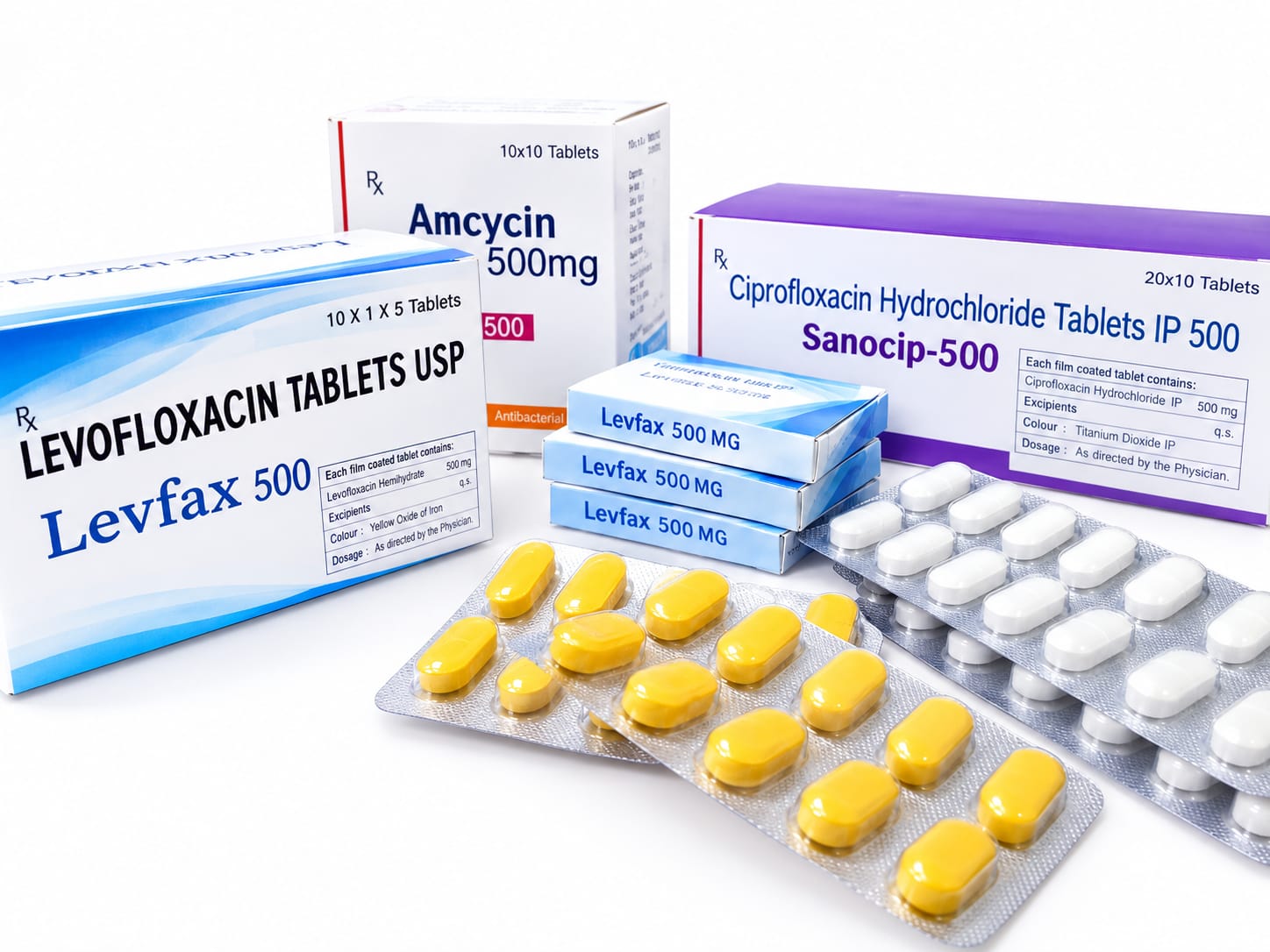
    Salus Pharmaceuticals manufactures formulations at its WHO-GMP and ISO 9001:2015 certified facility in Baddi, Himachal Pradesh, and has done since 2005. Module 3 inputs — batch formula, process description, in-process controls, batch analysis, container-closure specification and pack-specific stability — are compiled from the site’s own records for the pack and market the buyer is registering, and Salus currently supplies markets including Nigeria, Bangladesh and Sri Lanka.

    Tell us the destination regulator and the pack you intend to register, and we will tell you which Module 3 inputs we can supply and what has to come from the API manufacturer.

  • Antibiotic Supply and Stewardship: What Buyers Should Ask a Manufacturer

    Antibiotic Supply and Stewardship: What Buyers Should Ask a Manufacturer

    Buying antibiotics now means buying into a stewardship position, whether you intended to or not. Three things about a supplier decide whether your order helps or hurts the resistance picture in your market: which WHO aware group the range sits in, whether every pack can be traced back to a batch and an investigation, and whether the pack size matches the treatment course your prescribers actually use. None of those is a price question, and all three are answerable before you place an order.

    WHO’s global antibiotic resistance surveillance report, published in October 2025, found that one in six laboratory-confirmed bacterial infections worldwide was resistant to antibiotic treatment in 2023. Resistance rose in more than 40 per cent of the pathogen–antibiotic combinations monitored between 2018 and 2023, at an average of 5 to 15 per cent a year.

    The regional split is the part that matters to a procurement officer in South Asia or West Africa. In the South-East Asia and Eastern Mediterranean regions, one in three infections was resistant. In the African region, one in five. More than 40 per cent of E. coli and over 55 per cent of K. pneumoniae globally are now resistant to third-generation cephalosporins, and in the African region that figure exceeds 70 per cent. Carbapenem resistance, WHO notes, was once rare and is becoming more frequent.

    The mortality forecast points the same way. The Global Research on Antimicrobial Resistance study published in The Lancet in 2024 estimated 1.14 million deaths directly attributable to bacterial AMR in 2021 and 4.71 million associated with it, rising to a projected 1.91 million attributable deaths a year by 2050. Cumulatively, the study forecasts 39 million deaths directly due to AMR between 2025 and 2050, of which 11.8 million are forecast in South Asia — the highest regional burden.

    WHO also reported that 48 per cent of countries did not submit surveillance data in 2023. If your national data is thin, your tender specification is doing more work than you think it is.

    AWaRe is a procurement category now, not only a clinical one

    The WHO AWaRe classification sorts antibiotics into Access, Watch and Reserve groups. At the 2024 UN General Assembly high-level meeting on antimicrobial resistance, member states endorsed a target that by 2030 at least 70 per cent of global human antibiotic consumption should be Access group antibiotics. Progress is tracked annually through GLASS.

    That target is a purchasing instruction as much as a prescribing one. A supplier’s range can be mapped to AWaRe in an afternoon, and the map tells you something useful: a portfolio weighted towards Watch and Reserve molecules is a portfolio that will push your national Access share in the wrong direction, regardless of how the products are prescribed. Ask for the range with the AWaRe group written against each molecule. A manufacturer who has never been asked will take a few days; one who cannot produce it at all is worth noting.

    Traceability: what “batch traceable” should actually mean

    India’s requirement here is narrower than most buyers assume. Under G.S.R. 823(E), notified 17 November 2022 and effective 1 August 2023, drug formulations in the top-300-brand schedule must carry a barcode or QR code encoding a unique product identification code, brand and generic name, manufacturer name and address, batch number, date of manufacture, expiry date and manufacturing licence number — printed on the primary label, or on secondary packaging where there is no room.

    That rule does not cover every product, and the parallel export requirement has gone. In February 2025 the Directorate General of Foreign Trade withdrew para 2.76 of the Handbook of Procedures — the long-deferred track-and-trace system for pharmaceutical exports, including primary-level barcoding and parent-child data upload — on the basis that the health ministry’s own barcoding rules and destination-market serialisation requirements now cover the ground.

    The practical consequence for an importer: do not assume an Indian-made antibiotic pack carries a serialised code. Ask what is actually printed, at which packaging level, and what the manufacturer can retrieve from a batch number alone — batch record, analytical results, deviation history, distribution list. Traceability that stops at the shipper is not traceability.

    Labelling can support stewardship or quietly undermine it

    India’s Schedule H1, notified as G.S.R. 588(E) on 30 August 2013 and in force from 1 March 2014, covers certain third- and fourth-generation antibiotics, anti-TB drugs and habit-forming medicines. It requires a red “Rx” symbol and a boxed warning with a red border reading, in part: “It is dangerous to take this preparation except in accordance with the medical advice. Not to be sold by retail without the prescription of a Registered Medical Practitioner.” Retailers must keep a separate register of each supply for three years.

    Its measured effect is instructive. A published interrupted time series analysis of Indian sales data from 2008 to 2018 found an immediate 10 per cent reduction in the use of Schedule H1 medicines after implementation and a sustained 9 per cent trend decline — while overall antimicrobial consumption kept rising, and carbapenem use went up. Labelling changes behaviour at the margin. It does not carry a stewardship programme on its own.

    Product selection matters more than label text. In August 2024 India’s health ministry prohibited 156 fixed-dose combinations, including antibiotic combinations, on the Drugs Technical Advisory Board’s advice, as irrational combinations carrying risk where safer alternatives exist. If a quotation offers you an antibiotic FDC, the first question is whether it is approved in India and in your own market — not what it costs.

    Pack design is a stewardship decision

    Pack size sets treatment duration in practice, because patients are told to finish the pack. A 2015 Australian analysis of common primary-care prescribing scenarios found that of 32 scenarios, ten pack sizes supplied surplus doses, eighteen supplied too few, and only four matched the guideline course. Surplus antibiotics end up in a cupboard, taken later by the patient or by somebody else, or discarded into waste water where they contribute to resistant strains.

    This is one of the few stewardship levers a buyer controls directly. Specify the course, not the count, and ask the manufacturer to build the blister to it.

    Six questions worth putting to an antibiotic manufacturer

    AskA good answer looks likeWhy it matters
    Map your antibiotic range to WHO AWaRe groupsA product list with Access / Watch / Reserve marked against each moleculeTells you whether the order moves your national Access share towards or away from the 70% target
    What is printed on the pack, and at which packaging levelSpecific: fields encoded, primary or secondary label, whether codes are serialisedIndia’s barcode rule does not cover every product, and the DGFT export track-and-trace requirement was withdrawn in 2025
    What can you retrieve from a batch number aloneBatch record, analytical results, deviations, distribution list — with a stated turnaroundThis is what a recall or a field complaint actually runs on
    Which blister configurations can you build to a treatment courseWillingness to quote more than one configuration and a stated minimum batch sizePack size sets duration in practice; mismatched packs create leftover antibiotics
    Stability data at 30°C/75% RH for the exact pack offeredPack-specific data, not product-general dataBarrier properties differ by pack; the destination climate does not care what the product can do in another one
    Any Not of Standard Quality declaration on these products, and what changedA direct answer, the investigation conclusion, and the corrective actionSubstandard antimicrobials feed resistance directly; a supplier who deflects here will deflect later

    How Salus approaches this

    Salus Pharmaceuticals manufactures at a WHO-GMP and ISO 9001:2015 certified facility in Baddi, Himachal Pradesh, operating since 2005 across 21-plus therapeutic categories, with tablets and capsules  supplied in blister packs and  in alu-alu. Antibiotic enquiries are answered with the molecule, strength, pack configuration and pack-specific stability position together, because those four determine whether an order is usable in the destination market.

    https://www.saluspharmaceuticals.com/products.html#antibiotics

  • Why Baddi Became India’s Formulation Belt

    Why Baddi Became India’s Formulation Belt

    Baddi is a formulation cluster because of a tax decision, not a geographical or technical one. In 2003 the central government gave new industrial units in Himachal Pradesh a ten-year exemption from central excise duty and a five-year income tax holiday, and manufacturers moved up from Punjab and Haryana to claim it. Those incentives have almost entirely run out. What is left is a dense supply base, a large number of plants of very uneven quality, and a buyer’s problem: the postcode no longer tells you anything.

    What the 2003 package actually gave

    The special industrial package covered Himachal Pradesh alongside Uttarakhand, Jammu and Kashmir and the North East. For a new unit it meant ten years free of central excise duty and five years free of income tax, on top of state-level subsidies and cheaper power.

    The excise clock ran from each unit’s own start of commercial production rather than from a common date, which is why the belt did not lose the benefit all at once. Reporting from 2013 put roughly 250 pharma SMEs in the Baddi–Barotiwala–Nalagarh region — 75 to 80 per cent of the pharma units there — facing expiry between 2014 and 2016. The income tax holiday was curtailed earlier, in 2010.

    The predicted consequence arrived. Contract manufacturers without their own marketed products, which had been built on a cost advantage rather than a customer base, went looking for buyers or joint ventures. Over-capacity and thin margins became the region’s normal condition, and they still are.

    What replaced the exemption

    When GST came in on 1 July 2017 the exemption mechanism itself disappeared. The Scheme of Budgetary Support, notified on 5 October 2017, reimburses eligible units 58 per cent of the central tax and 29 per cent of the integrated tax paid in cash, for what the scheme calls the “residual period” — the remainder of the original ten years from the unit’s start of commercial production.

    The date to note is in the scheme itself: “The overall scheme shall be valid upto 30.06.2027.” After that there is no tax reason to make tablets in Baddi rather than anywhere else in India. Any plant that still depends on the residual subsidy for its cost position has a little under a year of it left.

    Baddi’s origin story, in dates

    WhenWhat changed
    2003Central industrial package: ten-year central excise exemption and five-year income tax holiday for new units in Himachal Pradesh
    2010Income tax holiday curtailed; units established by then retained benefits into the following decade
    2014–2016Excise exemption expires unit by unit for the bulk of BBN’s pharma SMEs; consolidation and distress sales follow
    1 July 2017GST replaces central excise; the exemption route ends
    5 Oct 2017Scheme of Budgetary Support notified — 58% of CGST and 29% of IGST reimbursed for the residual period only
    28 June 2024Revised Schedule M becomes applicable to manufacturers above Rs 250 crore turnover
    11 Feb 2025G.S.R. 127(E) gives smaller manufacturers who applied in time until 31 December 2025 to comply
    31 Dec 2025That extension expires
    30 June 2027Scheme of Budgetary Support ends

    What actually remains

    The cluster effect. The Tribune reported in 2025 that the belt holds more than 350 manufacturing units, of which around 150 carry FDA approvals, and that Himachal Pradesh exported pharmaceutical products worth about Rs 10,000 crore in 2023.

    For a buyer, density is the real asset. Blister foil, alu-alu foil, cartons, printed inserts, shippers, engineering spares, qualified maintenance contractors and analytical laboratories are all within an hour’s drive. A packing change that would take a fortnight to source elsewhere takes days. Recruitment of production and QA staff draws on a pool that has worked in the same industry in the same valley. None of this is a quality claim. It is a lead-time and cost-of-change claim, and it is the one that survives the end of the tax holiday.

    The uncomfortable part

    Concentration cuts both ways, and the enforcement record is public. In the November 2025 monthly drug alert, 49 of 205 samples declared Not of Standard Quality nationally — 23.09 per cent — were traced to units in Himachal Pradesh, across Baddi, Barotiwala, Nalagarh, Solan, Kala Amb, Paonta Sahib and Una. The state drugs controller issued show-cause notices, ordered batch recalls and began risk-based inspections of the deficient units.

    That is a state-level statistic, not a verdict on any individual plant, and it is exactly why a buyer should stop treating “Baddi” as a credential. Nationally, CDSCO and state drug controllers inspected 400 premises on a risk basis and took more than 300 actions — show-cause notices, stop-production orders, licence suspensions and cancellations. India is also not a member of the Pharmaceutical Inspection Co-operation Scheme, and CDSCO does not appear on the PIC/S list of applicants as of September 2026, so there is no mutual-recognition shortcut that lets you skip your own assessment.

    What to judge a Baddi plant on

    Ask about the plant, not the region.

    Which Schedule M cohort it was in, and what it did. Revised Schedule M applied to manufacturers above Rs 250 crore turnover from June 2024. Smaller manufacturers had to apply for an extension under G.S.R. 127(E) and comply by 31 December 2025. Ask which category the plant fell into, whether it applied, and what was physically upgraded — not whether it “complies”.

    The certificate scope, not the certificate. A WHO-GMP certificate covers specified sections of a site. Confirm that the section making your dosage form is named on it, and ask for the date of the last joint inspection.

    Its own quality record, in writing. Ask directly whether any of the plant’s products have been declared Not of Standard Quality, what the investigation concluded and what changed. A manufacturer that cannot discuss this calmly is telling you something.

    Whether it makes for itself or for others. A pure contract manufacturer, a brand owner and an exporter have different incentives around batch size, changeover and documentation. None is wrong; they are not interchangeable.

    Stability data for your climatic zone and your pack. Baddi’s own climate is irrelevant to a shipment landing in Lagos or Chattogram. Ask for 30°C/75% RH data on the exact pack.

    How Salus approaches this

    Salus Pharmaceuticals has manufactured formulations in Baddi since 2005 at a WHO-GMP and ISO 9001:2015 certified facility, with over 200 staff, 21-plus therapeutic categories, and tablets, capsules and oncology formulations packed in blister, alu-alu and aluminium formats. Buyers assessing the plant are shown the site, the certificate scope and the documentation system rather than a presentation about the region.

  • What a COPP Actually Proves — And What It Doesn’t

    What a COPP Actually Proves — And What It Doesn’t

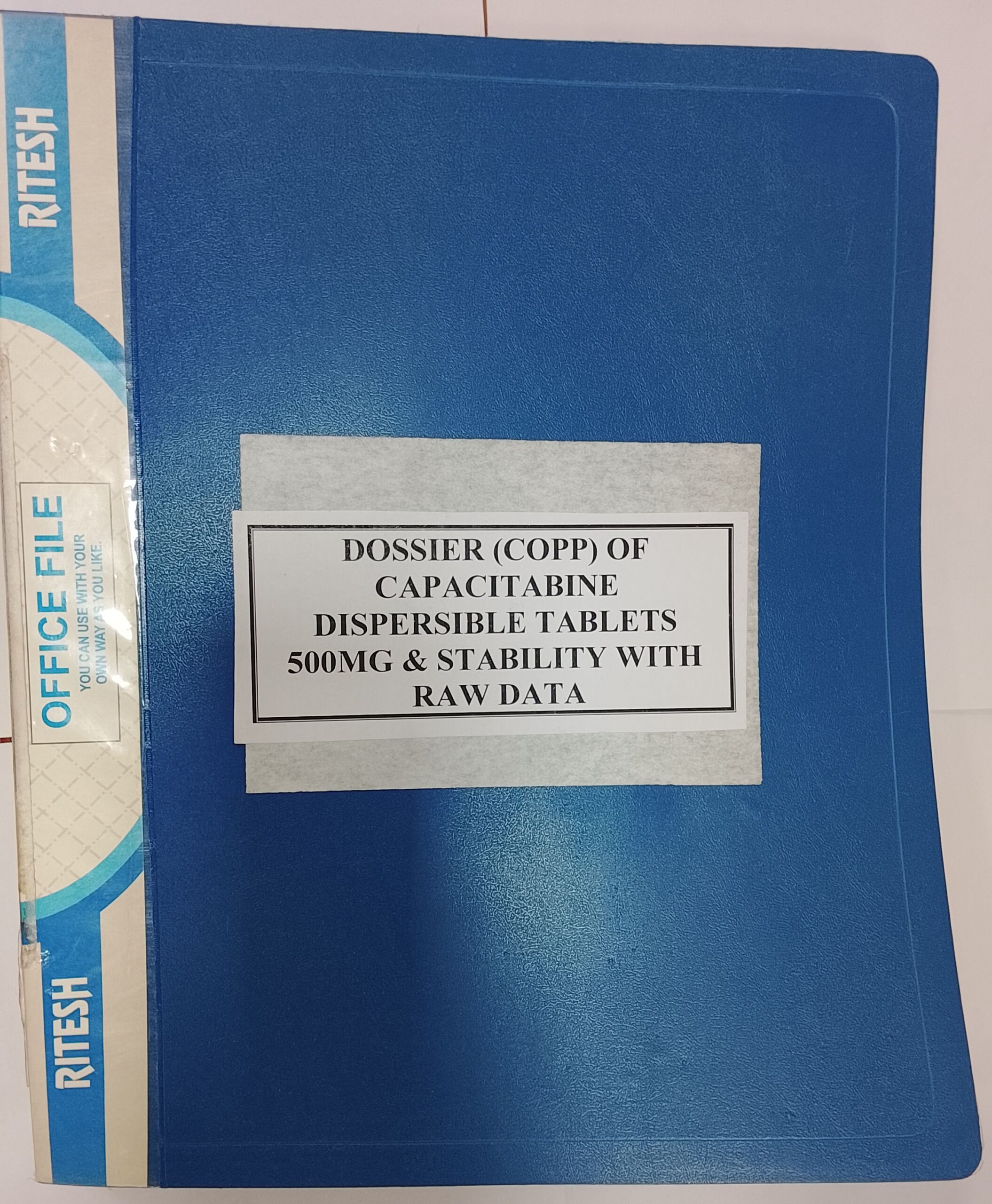
    A Certificate of Pharmaceutical Product proves three administrative facts and nothing more: that one specific product holds a marketing authorisation in the exporting country, whether that product is actually sold there, and that the site making it has been inspected against WHO GMP. It says nothing about the batch in your container. If you are registering an Indian product for the first time, understanding that boundary will save you a rejection and a wasted authentication cycle at your embassy.

    One product, one certificate

    The WHO guidance is explicit that the certificate “is for a single product only since the manufacturing arrangements and approved information for different dosage forms and different strengths can vary.” A 500 mg tablet and a 250 mg tablet of the same molecule are two certificates. A twelve-product order is twelve certificates.

    This is where most first enquiries go wrong. Buyers ask a manufacturer to “send your COPP”, expecting a single document covering the factory. That document exists, but it is a different one — the WHO-GMP certificate, which covers the site and the categories of product licensed there. The CoPP is the product-level certificate built on top of it. Ask for both, and ask for the CoPP product by product against the exact strengths and pack presentations you intend to register.

    The three lines an overseas regulator reads first

    The WHO model certificate runs to several numbered boxes, but a reviewing assessor goes straight to three of them.

    Box 1.3 asks: “Is this product authorized by the certifying authority to be marketed in the certifying country or within the jurisdiction of the certifying regional authority?” A “No” here is not automatically fatal, but it moves the file into a different queue.

    Box 1.4 asks: “Is this product actually on the market in the certifying country?” — with Yes, No or Unknown as the permitted answers. This is the box that surprises importers. Plenty of Indian-made products are manufactured for export only. Under the CDSCO export No Objection Certificate route, the manufacturer undertakes that “the entire quantity… shall be exported and no part of it will be diverted for domestic sale in India”, and the pack is labelled “For export only – Not for domestic consumption.” That is a lawful, documented arrangement — but it produces a “No” in box 1.4, and some importing authorities treat that answer as a reason to ask for more.

    Box 3.5 asks whether “the facilities and operations of the manufacturer of the FPP conform to good manufacturing practices (GMP) as recommended by WHO.” This is the line the certificate exists for. Read it alongside the site’s WHO-GMP certificate and the date of the last inspection.

    Who issues it, and how long the process takes

    CDSCO administers the WHO certification scheme in India in coordination with the State Licensing Authorities. For a plant in Himachal Pradesh, the application is made to the State Licensing Authority and the inspection is a joint one, carried out by CDSCO zonal or sub-zonal officers together with state representatives.

    How long it stays valid — two answers, not one

    The WHO guidance leaves validity to the issuing authority: “A period of validity can be provided by the authority on the certificate.” There is no universal expiry.

    In Indian practice, WHO-GMP certificates and CoPP have carried a three-year validity since 2018, when the Drugs Controller General extended it from two years. That figure has moved before — in May 2020 CDSCO extended certificates expiring between March and August 2020 by a further six months — so verify the dates printed on the actual document rather than assuming the rule.

    The validity that constrains you, though, is usually the importing regulator’s. NAFDAC, for example, requires that the certificate be issued by the health or regulatory body in the country of manufacture, conform to WHO format, and be authenticated by the Nigerian Embassy or High Commission in the country of origin — with a Commonwealth or ECOWAS mission acceptable where no Nigerian mission exists. The accompanying cGMP certificate must be “valid at the time of submission.” Authentication takes weeks. A certificate with eight months left on it can still be too old by the time your dossier is assessed.

    What a CoPP does not prove

    It does not certify the consignment. WHO deals with individual consignments through a separate instrument — the batch certificate, which “refers to an individual batch” and is described as a vital instrument in the procurement of medicines. The CoPP is for registration; the batch certificate and certificate of analysis are for the shipment. Treating a CoPP as a quality release is a category error, and it is the one that most often shows up in a first-time importer’s file.

    It also does not attest bioequivalence, stability in your climatic zone, or suitability of the pack for your market. Box 4 asks only whether “the information submitted by the applicant satisfy the certifying authority on all aspects of the manufacture of the product” — a statement about that authority’s satisfaction, not a technical opinion you can use in place of data.

    Reading a WHO-format CoPP: the boxes that matter

    BoxWhat it asksWhat to do with the answer
    1.3Is the product authorised to be marketed in the certifying country?If “No”, go straight to box 2.B for the reason before anything else
    1.4Is the product actually on the market there? (Yes / No / Unknown)“No” is normal for export-only products — ask for the export NOC and a specimen of the “For export only” label
    2.A.1Marketing authorisation number and date of issueCheck it matches the exact strength and dosage form you are registering, not a sister product
    2.BIf not authorised, the reason: not required / not requested / under consideration / refused / withdrawal for commercial reasons / withdrawal for sanitary reasons“Refused” or “withdrawal for sanitary reasons” ends the assessment. The others do not
    3.5Do the facilities conform to WHO-recommended GMP?Pair with the site WHO-GMP certificate and the date of the last inspection
    4Does the applicant’s submitted information satisfy the certifying authority?A “No” here is rare and material — ask what was outstanding

    How Salus approaches this

    Salus Pharmaceuticals manufactures at a WHO-GMP and ISO 9001:2015 certified facility in Baddi, Himachal Pradesh, and has done so since 2005. Certification documents are issued product by product through the State Licensing Authority route described above, and export documentation for Nigeria, Bangladesh and Sri Lanka is prepared against each destination regulator’s own authentication and currency requirements rather than as a single standard pack.

    Need COPP documentation for your products?

    [Ask for our current CoPP list, product by product →]

    https://www.saluspharmaceuticals.com/contact.html

  • Diabetes Care in Emerging Markets: Notes from an Antidiabetic Tablets Manufacturer in India

    Diabetes Care in Emerging Markets: Notes from an Antidiabetic Tablets Manufacturer in India

    Antidiabetic Tablets Manufacturer India | Salus Pharmaceuticals

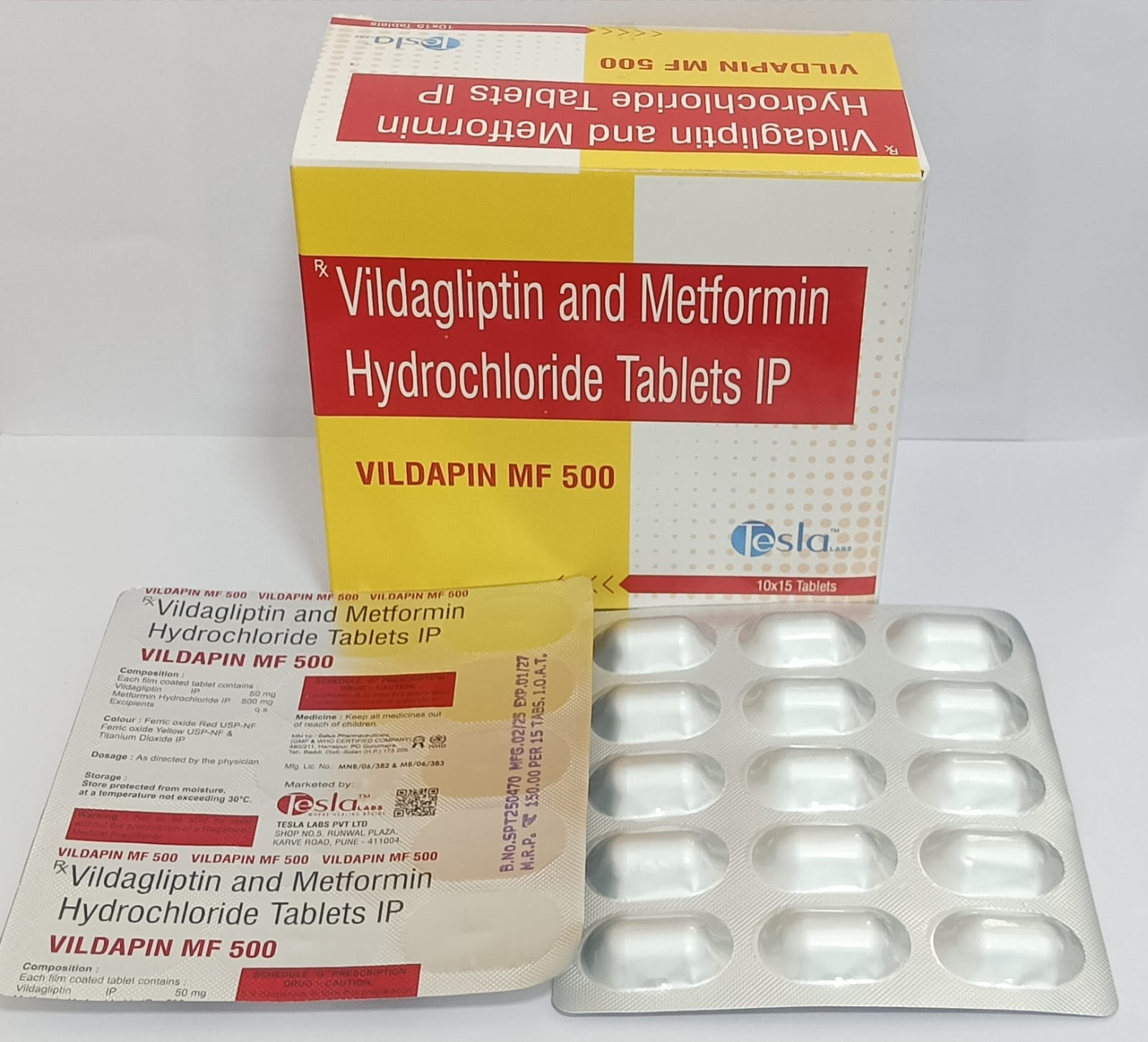
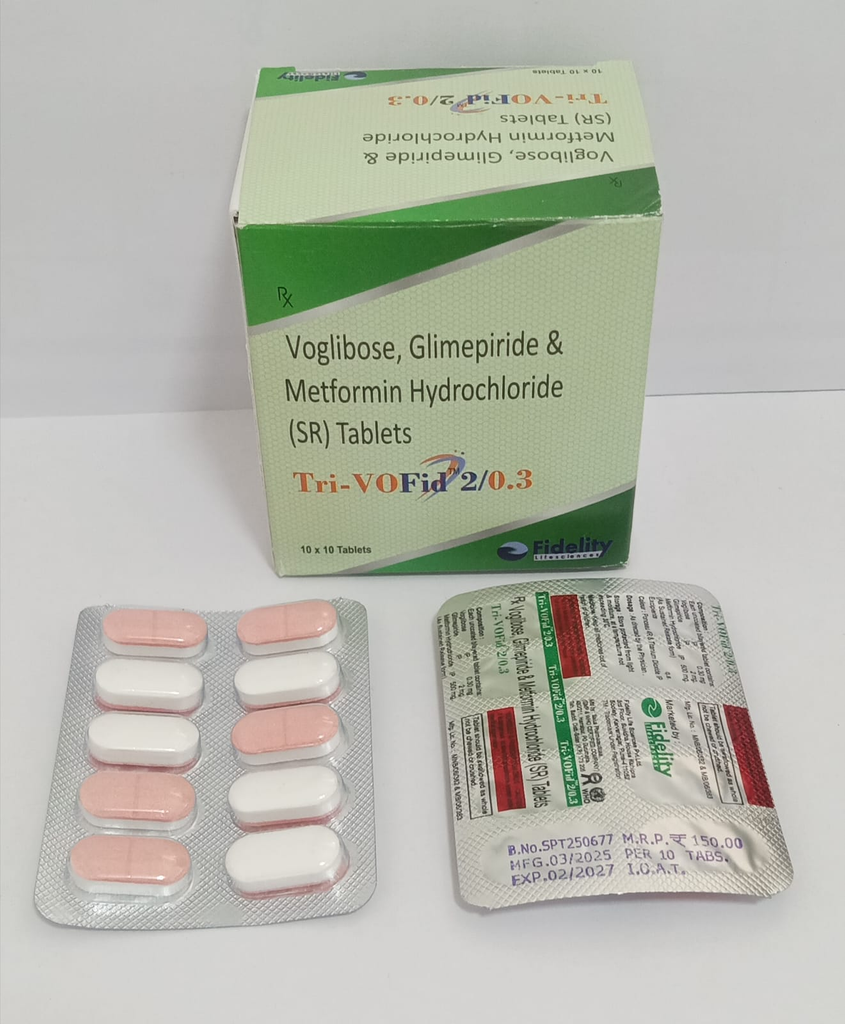
    Three things decide whether a diabetes order works commercially in an emerging market, and none of them is the molecule. Metformin still anchors almost every treatment plan. Price is set by public procurement rather than by the pharmacy shelf. And pack size moves the landed cost more than the active ingredient does. Buyers who understand those three points stop guessing at diabetes tenders and start costing them.

    The demand is concentrated where budgets are thinnest

    The International Diabetes Federation now puts the number of adults aged 20–79 living with diabetes at 589 million, or 11.1% of that age group, rising to a projected 853 million by 2050. That is 45% growth against roughly 25% population growth over the same period — diabetes is outrunning demography.

    The number that matters more to a procurement officer is the undiagnosed one. Around 252 million adults — 42.8% of everyone with diabetes — do not yet know they have it, and 86.9% of those undiagnosed cases sit in low- and middle-income countries. In South-East Asia, 42.7% of the diabetic population is undiagnosed.

    That gap is the forecasting problem. Africa currently records the world’s lowest age-standardised prevalence at 5.0%, but it is not a low-demand market — it is a low-diagnosis market. Every screening programme, every insurance expansion, every new district-level clinic converts undiagnosed prevalence into prescriptions, and the demand curve steps up rather than sloping. If you forecast a diabetes tender on today’s dispensing volumes alone, you will under-order. Forecast on diagnosis capacity instead.

    Metformin still anchors the order book

    The therapeutic conversation has moved on considerably. In September 2025 the WHO added semaglutide, dulaglutide, liraglutide and tirzepatide to its Model List of Essential Medicines — but for a deliberately narrow group: adults with type 2 diabetes who also have established cardiovascular disease or chronic kidney disease and obesity. In the same announcement, the WHO was blunt that “high prices of medicines like semaglutide and tirzepatide are limiting access,” and called for generic competition to bring them down .

    Affordability pressure is structural, not seasonal

    In India, scheduled antidiabetic formulations sit under ceiling prices set by the NPPA under the Drug Prices Control Order. Published research on partial price control of metformin has shown a predictable consequence: when only some strengths and forms are controlled, the market shifts toward combinations and presentations that are not. Any manufacturer quoting an Indian-market diabetes product is quoting inside that structure, and any importer benchmarking against Indian domestic prices should know which side of the schedule they are looking at.

    Export and institutional tenders apply the same pressure by a different route: lowest-evaluated-bid award. On a molecule as commoditised as metformin, no amount of formulation cleverness recovers a bad price. The margin is not in the API. It is in batch size, packing efficiency, yield, and rejection rate — the four things a buyer can actually influence by how they write the enquiry.

    Pack size decides the tender price

    This is the point most enquiries miss. On a low-cost, high-volume tablet, primary packing, carton, insert and shipper can account for a substantial share of ex-works cost. Change the pack configuration and you change the bid.

    The shape of the effect, using illustrative figures — plug in current rates before you rely on them:

    Pack configurationPacking cost per tabletNotes
    10s blisterHighestFamiliar retail pack; most foil and carton per tablet
    15s alu -aluHighCommon private-channel size in South Asia.  Better moisture barrier, fewer cartons per thousand tablets
    100s HDPE containerLowestCheapest per tablet; needs dispensing infrastructure at the clinic.  Strong fit for institutional dispensing

    Two cautions before you optimise straight to the largest pack. First, metformin tablets are physically large, especially at higher strengths, so pack volume drives freight and warehouse cost as well as material cost — a container’s worth of 10s blisters holds far fewer treatment courses than the same container of bulk packs. Second, the pack has to survive the market it ships to: stability at 30°C/75% relative humidity has to be demonstrated for the specific pack you intend to buy, not for the product in general.

    The practical fix is simple. Ask for two or three pack configurations in every quotation, not one.

    Four questions worth putting in the enquiry

    1. Which strengths, and immediate- or sustained-release? These are different manufacturing routes with different costs — settle it before pricing.
    2. Stability data at 30°C/75% RH for the exact pack offered. A quote without pack-specific stability data is not yet a quote.
    3. Blister, alu-alu or HDPE — with a packing cost per tablet for each. This is where the bid is won.
    4. Batch size and minimum order at each configuration. A price that only holds at a batch size you will never order is not a usable price.

    How Salus approaches diabetic care

    Salus Pharmaceuticals has manufactured formulations at its WHO-GMP and ISO 9001:2015 certified facility in Baddi, Himachal Pradesh since 2005, with diabetic care among its 21-plus therapeutic categories. Tablets are supplied in blister and capsules in alu-alu packs, and diabetes enquiries are quoted across more than one pack configuration as a matter of course, because the configuration is usually what decides whether the order is viable.

    Send us the strengths, the annual volume and the destination market, and we will come back with a costing across pack options rather than a single line item.

  • Why Oncology Brands Grow Faster With Salus Pharmaceuticals

    Why Oncology Brands Grow Faster With Salus Pharmaceuticals

    Zero-defect manufacturing isn’t a claim we make — it’s a system we built.

    In oncology, there is no margin for a mix-up. A wrong carton, a delayed invoice reconciliation, an unqualified operator running a compression machine, an audit finding that surfaces six months too late — any one of these can cost a brand its regulatory standing, its market, or worse, patient trust.

    At Salus Pharmaceuticals — a WHO-GMP and ISO 9001:2015 certified formulation manufacturer under the Arvincare Group, based in Baddi, Himachal Pradesh — we took a simple position: the way to eliminate risk for our customers is to remove the human error points from every system that touches their product, their money, and their compliance record.

    Over the last year, we’ve built and deployed a set of purpose-engineered digital systems across our operations. Here’s what they do, and why they matter to any brand — especially in oncology — considering Salus as a manufacturing partner.


    1. CDR / Artwork Version Control — Zero Wrong-Print Risk

    Printed packaging material is one of the most under-appreciated risk points in contract manufacturing. A vendor working off an old email, printing an outdated carton design, can trigger a recall before a single tablet is even packed.

    We built a single source of truth system for every carton, leaflet, cylinder, and printed foil we handle. Only one CDR version is ever “live” per item. Every purchase order for printed material is auto-checked against the master version — if a vendor is quoted or supplied an outdated version, the system flags it automatically before mass printing is ever authorized. No print run proceeds without a system-verified “OK TO PRINT.”

    What this means for you: your artwork is protected from the moment it’s approved to the moment it reaches a carton — with a full change log proving exactly when and why each version changed, ready for any auditor who asks.

    2. CRM & Collections FMS — Transparent, Verifiable Business Dealings

    Every commercial relationship runs on trust in the numbers. Our CRM Collection system tracks every invoice, every receipt, and every ageing bucket — with receipts verified independently by Accounts, never by the person managing the relationship. A 100-point scorecard and automated integrity checks mean nothing slips through informally.

    What this means for you: full visibility into your account status at any time, with a system that makes disputes and reconciliation errors structurally rare rather than something you have to chase down.

    3. APQR Format Pack & FMS — Audit-Ready Quality Data, Always

    Annual Product Quality Reviews are where regulatory relationships are won or lost. Our APQR system runs across 21 standardized formats with built-in Cp/Cpk statistical analysis, a data-provenance log for every figure, and completeness gates that block a review from closing until every data point is verified and sourced.

    What this means for you: when your regulatory team — or a WHO inspector, or a third-party auditor — asks “show me the trend data behind this batch,” the answer is one query away, not a week of digging through files.

    4. Self Inspection FMS — Continuous Compliance, Not Once-a-Year Panic

    Self-inspection under Schedule M and WHO-GMP isn’t a checkbox exercise for us. Our system enforces the independence of every auditor, guarantees full coverage across all areas due for review, and — critically — makes retroactive date changes on any inspection impossible, because entries are locked in through a form-driven, timestamp-verified process the moment they’re submitted.

    What this means for you: the audit trail you’re relying on for your own regulatory submissions is real, timestamped, and cannot be quietly edited after the fact.

    5. Tablet Production Operator Scoring — Consistent Hands on Every Batch

    Batch-to-batch consistency starts with the people running the machines. We track operator qualification, machine-specific competency, and run-level performance across all 13 machines on our compression, coating, and granulation lines — with a scoring model that actively rewards operators for self-reporting errors and penalizes errors only caught later by audit or QA. That single design choice changes behavior: operators tell us the truth early, instead of hiding a deviation and hoping it isn’t found.

    What this means for you: the operator standing at the machine producing your batch is qualified for that exact machine, and the incentive structure around them is built to surface problems before they become yours.


    The Common Thread: Systems That Can’t Be Gamed

    Every system above shares the same design DNA:

    • No hand-typed dates. Every timestamp comes from a system source — a form submission, a master record — never a manual entry that could be backdated.
    • Segregation of duties, enforced by the system itself. The person being evaluated can never be the person who signs off on the evaluation.
    • Traceability by default. ALCOA+ principles aren’t a training slide here — they’re built into how data is captured, so every number has a verifiable origin.

    This isn’t compliance theater. It’s infrastructure that happens to make audits painless as a byproduct of making the underlying operations genuinely more reliable.

    Why This Matters More in Oncology

    Oncology formulations carry tighter tolerances, higher scrutiny, and less room for the kind of “we’ll fix it next batch” thinking that other therapeutic categories can sometimes absorb. A partner whose quality systems are built to withstand a WHO inspector’s toughest question — and whose commercial systems are built to withstand your own finance team’s toughest reconciliation — is a partner you can scale with, not just contract with.

    What This Means for Your Growth

    When your contract manufacturer has removed the error points from packaging, quality documentation, self-inspection, operator performance, and commercial reconciliation, the compounding effect shows up in your business, not just ours:

    • Faster regulatory approvals — because your dossiers are backed by audit-ready, provenance-tracked data from day one.
    • Fewer recalls and market-risk events — because the packaging error that caused a 50,000-unit misprint elsewhere in the industry is structurally prevented here.
    • Predictable, disputable-free commercial dealings — so your finance team spends time growing the relationship, not auditing it.
    • A partner that scales with you — because these are systems, not individual heroics, which means the reliability holds as volumes grow.

    We keep building. Every one of these systems started because something went wrong once, and we decided the right fix wasn’t “be more careful” — it was “build a system where the error can’t happen quietly again.”

    That’s the partnership we’re offering.


    Salus Pharmaceuticals — WHO-GMP & ISO 9001:2015 certified formulation manufacturer, Arvincare Group, Baddi, Himachal Pradesh.

  • In Loving Memory of Sandeep Chaubey Ji

    In Loving Memory of Sandeep Chaubey Ji

    Our PPIC Head, Our Colleague, Our Friend

    22 January 2021 – 7 August 2023

    There are days a company remembers not because of a milestone or a target achieved, but because of a loss that changes everything. 7th August 2023 is one such day for us — the day we lost Sandeep Chaubey Ji.

    A Man Who Held the Line

    Chaubey Ji joined us on 22nd January 2021 and took on the responsibility of heading our PPIC (Production Planning and Inventory Control) department — a role that demands precision, patience, and an unshakeable sense of responsibility. Every day, countless decisions pass through PPIC that keep a factory running smoothly: what gets produced, when, in what quantity, and how the material flows to make it all possible. Chaubey Ji carried that responsibility with a quiet dedication that the whole factory came to rely on.

    He wasn’t just punching in and out. He was the kind of employee who showed up — every single day, in every sense of the word.

    The Day We Lost Him

    On 7th August 2023, like any other working day, Chaubey Ji set out for the factory. The staff car that would normally have picked him up didn’t arrive that day — the driver was off. Instead of waiting or turning back, he did what he always did: he found a way to get to work. He set out on his bike.

    He never made it.

    He met with an accident on the road that day and lost his life — on his way to the very factory he had served so faithfully for over two and a half years.

    It is impossible to write that sentence without pausing. A day that should have been ordinary became the darkest day in our company’s history.

    Why We Still Remember Him

    Loyalty is a word that gets used often and means little most of the time. Chaubey Ji gave it real meaning. He was the kind of colleague who didn’t need to be asked twice, who showed up even when the circumstances made it harder, who took ownership of his department and his people.

    Since that day, not one of us who worked with him has stopped thinking about him from time to time — a decision that reminds someone of how he used to plan things, a quiet moment in the PPIC office, an anniversary that passes on the calendar. He is remembered not out of obligation, but because he genuinely earned that place in our memory.

    A Tribute, Not a Farewell

    We don’t write this to say goodbye — that already happened, far too soon and far too suddenly. We write this because some people deserve to be spoken of, remembered out loud, and not just carried silently.

    To Sandeep Chaubey Ji: thank you for your years of dedication, for the trust you built, and for the example you set of what it means to be truly committed to one’s work and one’s team. You are missed more than words can capture, and you remain, and always will remain, a part of this company’s story.

    Rest in peace, Chaubey Ji. You will not be forgotten.

  • Three Generations, One Vision: The Story Behind Salus Pharmaceuticals

    From a wholesale medicine stall in Kurukshetra to exports reaching 13 countries — how one family’s honesty and hard work became a pharmaceutical legacy.


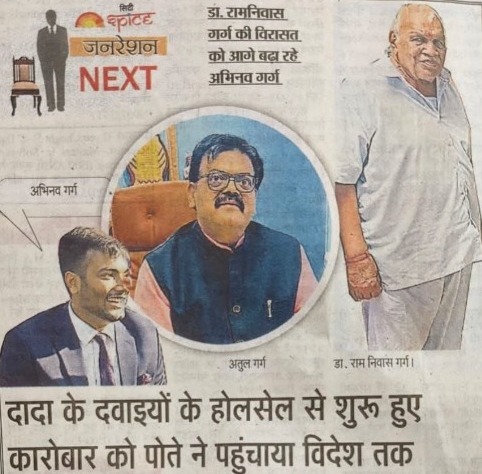
    Every great pharmaceutical company has a first prescription, a first customer, a first act of trust. Ours goes back to 1970, to a small wholesale medicine business in Kurukshetra, Haryana, started by Dr. Ram Niwas Garg.

    There was nothing extraordinary about the beginning — just a young man building relationships with customers one honest transaction at a time. But that honesty became the foundation on which an entire family business would one day stand.

    A Second Generation Takes the Leap

    Inspired by his father’s business, Mr. Atul Garg moved to Panchkula in 2006, carrying forward the same spirit of trust that Dr. Ram Niwas Garg had built. What began as a trading partnership in Parwanoo eventually became something Atul Garg would build entirely on his own — in 2008, he struck out independently.

    The turning point came in 2010, when trading gave way to manufacturing: the family’s first pharmaceutical production facility was set up. Growth followed steadily, and by 2018, a second facility had joined the first — a sign that the business was no longer just surviving, but scaling.

    The Grandson Who Took It Global

    Around the same time, Abhinav Garg — Atul Garg’s son and Dr. Ram Niwas Garg’s grandson — was coming of age. In 2017, he completed his MBA in Family Business Management in Mumbai, arriving with a clear intent: to take what his grandfather and father had built and give it a global footprint.

    Today, that intent has become reality. The group’s manufacturing facilities span Paonta Sahib and Baddi, with a head office in Sector-12A, Panchkula. The business now works with 2,500+ distributors and exports medicines to 13 countries — a scale that would have been unimaginable from that first wholesale counter in Kurukshetra.

    As Abhinav Garg put it:

    “This is a small step towards realizing my grandfather’s dreams. His vision remains my inspiration.”

    What Stayed the Same

    What’s notable about this journey isn’t just the growth — it’s what didn’t change along the way. The same principle that built customer trust in 1970 is the one guiding the business today: quality and integrity, applied consistently, at every stage of growth.

    In Abhinav Garg’s own words, the goal has never been to replace what his grandfather built, but to honor it:

    “Preserving my grandfather’s legacy, I’ve advanced the business with modern technology and new thinking — from the modest scale where it began to a name the industry now trusts.”

    Where Salus Pharmaceuticals Fits In

    This family legacy is the foundation on which Salus Pharmaceuticals’ Baddi facility stands today, under Abhinav Garg’s leadership. Our WHO-GMP and ISO 9001:2015 certified manufacturing, our commitment to affordable and effective medicines, and our expanding presence across global markets are a continuation of the same values that started this story more than five decades ago: earn trust, do the work honestly, and let the results speak.

    Three generations. One vision. And a business that’s still just getting started.


    Story reference: Dainik Jagran, Panchkula edition — “Generation Next” feature on Dr. Ram Niwas Garg’s legacy carried forward by Abhinav Garg.

  • The Women Behind the Manufacturing Floor: Skills We Need to Recognise

    The Women Behind the Manufacturing Floor: Skills We Need to Recognise

    Working in pharmaceutical manufacturing has taught me something that is easy to miss when you only look at designations and organisational charts.

    Some of the most valuable skills in a manufacturing organisation are built on the shop floor.

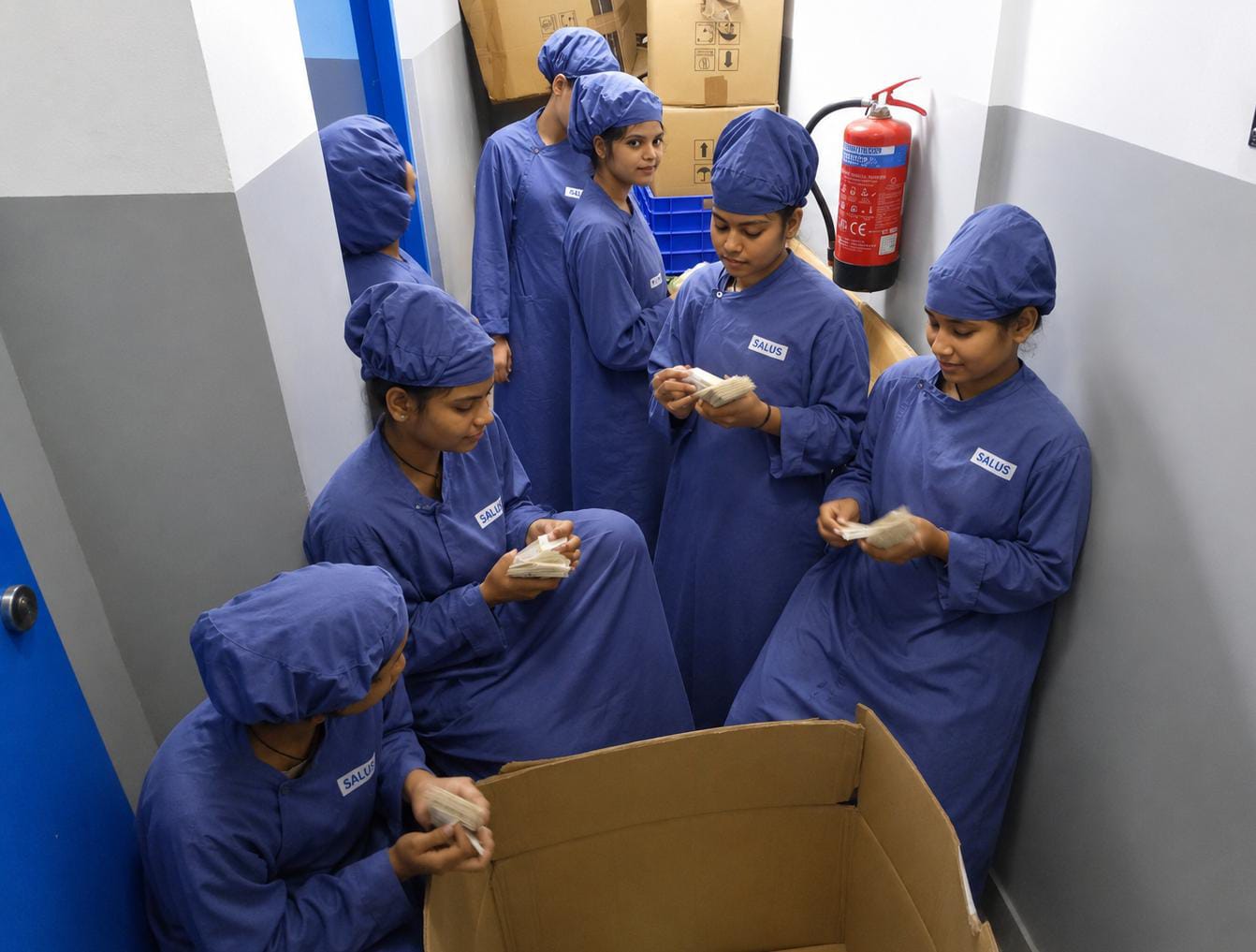
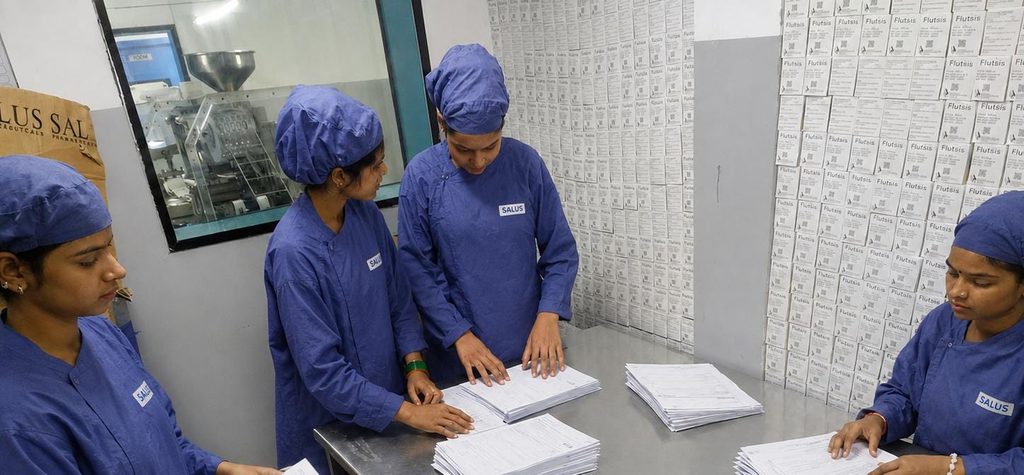
    At Salus Pharmaceuticals, I have had the opportunity to see women contribute across different stages of manufacturing and quality operations—handling processes with discipline, maintaining consistency, performing in-process checks, supporting documentation, managing packing activities and ensuring that every step is carried out with attention to detail.

    From the outside, some of these responsibilities may appear routine.

    They are anything but routine.

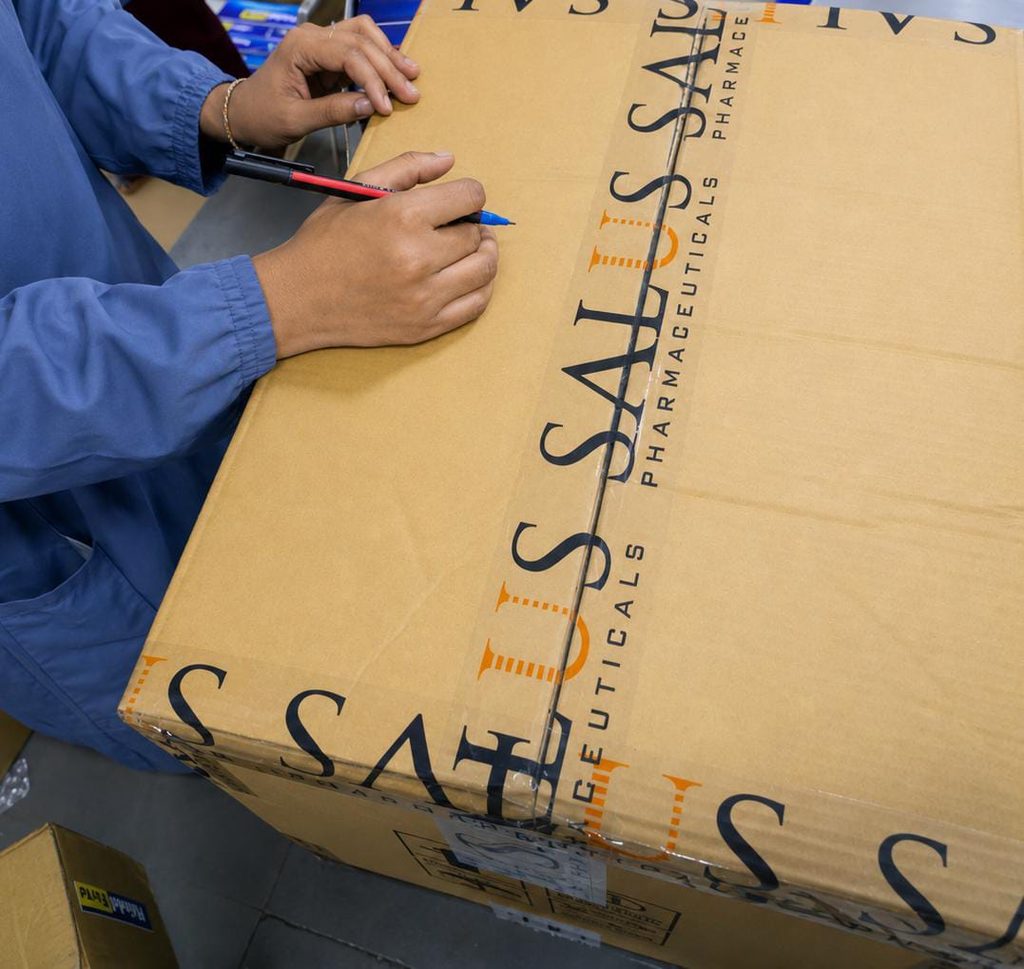
    Female worker handling boxes on the pharmaceutical manufacturing floor

    Pharmaceutical manufacturing demands precision. A small variation can affect quality. A missed step can affect an entire batch. Consistency is not simply expected—it is essential.

    And this is where experience on the manufacturing floor becomes incredibly valuable.

    A person who has spent years working around a process develops an understanding that cannot always be taught through a classroom or a manual. They begin to recognise when something is not moving as it normally should. They understand the importance of sequence, cleanliness, documentation, line clearance and process discipline.

    That is expertise.

    Yet, too often, we measure careers only through promotions, titles and formal qualifications, while overlooking the practical knowledge people accumulate through years of doing the work.

    Women working in manufacturing deserve to be recognised not simply for being part of the workforce, but for the technical understanding, discipline and process knowledge they bring to the organisation.

    At Salus Pharmaceuticals, I believe manufacturing is not just about machines, systems and technology.

    It is about people who understand those systems, respect the process and take responsibility for the quality of what ultimately reaches a patient.

    And when we talk about the future of pharmaceutical manufacturing, we should make sure that women on the manufacturing floor are part of that conversation—not invisible within it.

    Because behind every compliant batch and every quality product, there are people whose experience, attention and discipline make it possible.

    Female workers handling documents on the pharmaceutical manufacturing floor

    It is time we recognise that contribution.

  • How Salus Pharmaceuticals Improved Pharmaceutical Manufacturing Operations

    Mehak Aggarwal and her husband are the third generation running their family’s pharmaceutical manufacturing business. Salus Pharmaceuticals operates a WHO GMP certified plant in Baddi, Himachal Pradesh, manufacturing tablets, capsules, and injections, including oncology products. A second unit, Sunvet Healthcare in Kala Amb, makes eye drops. The Baddi plant alone runs on around 300 people, 107 of them staff.

    That is not a small operation. Pharma manufacturing is one of the most documented, most audited, most process heavy industries in India. Every batch has a record. Every deviation has a form.

    And yet both owners were inside the plant seven days a week.

    That was Mehak’s own description of her weeks. Not strategy. Not expansion. Manpower and production fires, every single day, in a business that was already third generation and already certified to global standards.

    These challenges can have a direct impact on pharmaceutical manufacturing operations, especially when manpower and production activities are managed manually.

    Why Data Matters in Pharmaceutical Manufacturing

    Here is the uncomfortable question. If a pharma plant already generates this much data, why were two capable owners still finding problems by standing on the floor?

    Because data sitting in registers and batch records is not the same as data an owner can read. Nobody had translated the plant into a form that answered the only question that matters at the top: where is today’s bottleneck?

    Using production data effectively can help pharmaceutical manufacturers identify bottlenecks, monitor operations, and make faster business decisions.

    The gap was never capability. Mehak and her husband run a plant that clears WHO GMP audits. The gap was that no tool existed to show them the business without them physically walking it. Someone had to sit with them, name the problem in their own language, and build the tools alongside them. That work took months, one dashboard at a time, and every dashboard removed one more reason to be on the floor.

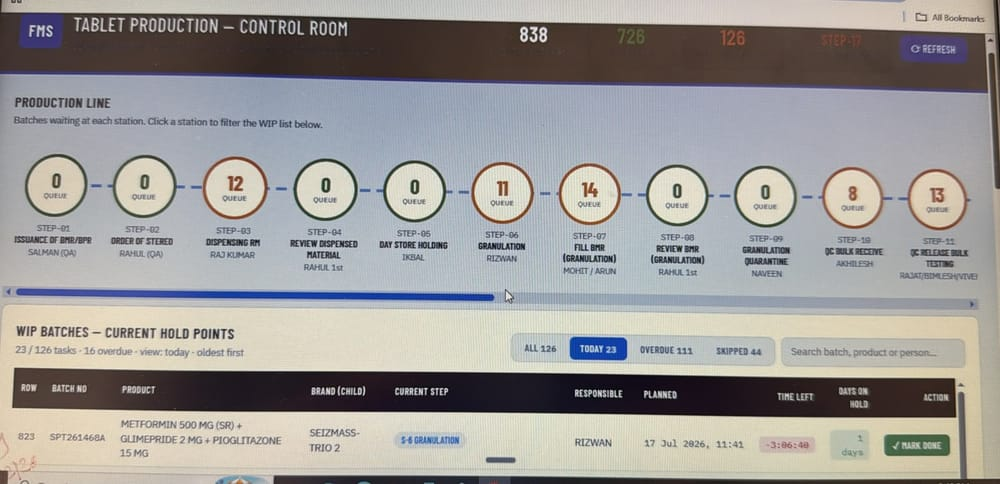
    Dashboards for Pharmaceutical Manufacturing Operations

    Dashboards. Not one master dashboard, but a set of them, built together over months of working side by side, each one answering a specific operational question.

    We have built together lots of dashboards which now help me identify the bottleneck in just seconds

    Seconds. The thing that used to take a full day of walking the floor, asking supervisors, and cross checking registers now takes seconds from anywhere. This data-driven approach has made pharmaceutical manufacturing operations more efficient and easier to monitor.

    The Pharmaceutical Manufacturing Dashboard :

    Here is what that changed in practice:

    BeforeNow
    Seven days a week inside the plantOne day a week. Monday.
    Bottlenecks found by walking the floorBottlenecks identified in seconds on a dashboard
    Chasing employees for updatesEmployees run on the system, not on reminders
    Late nights and business talk at the dinner tableEvenings, weekends, and trips are theirs again


    Results: Improving Pharmaceutical Manufacturing Operations

    The numbers first. Time inside the plant dropped from seven days a week to one. Attrition dropped from 6% to 2.1%, because a team that is not being chased every day is a team that stays.

    Then the compounding effect. With the plant no longer consuming every waking hour, the couple did something most manufacturers never find the bandwidth for. They wrote and launched a book, Killing Cancer: 13 Secrets of High-Stakes Pharma Manufacturing, with a media launch that got covered in more than 14 newspapers.

    The Book
    That is what the freed hours became. Not rest alone. Higher order work .